
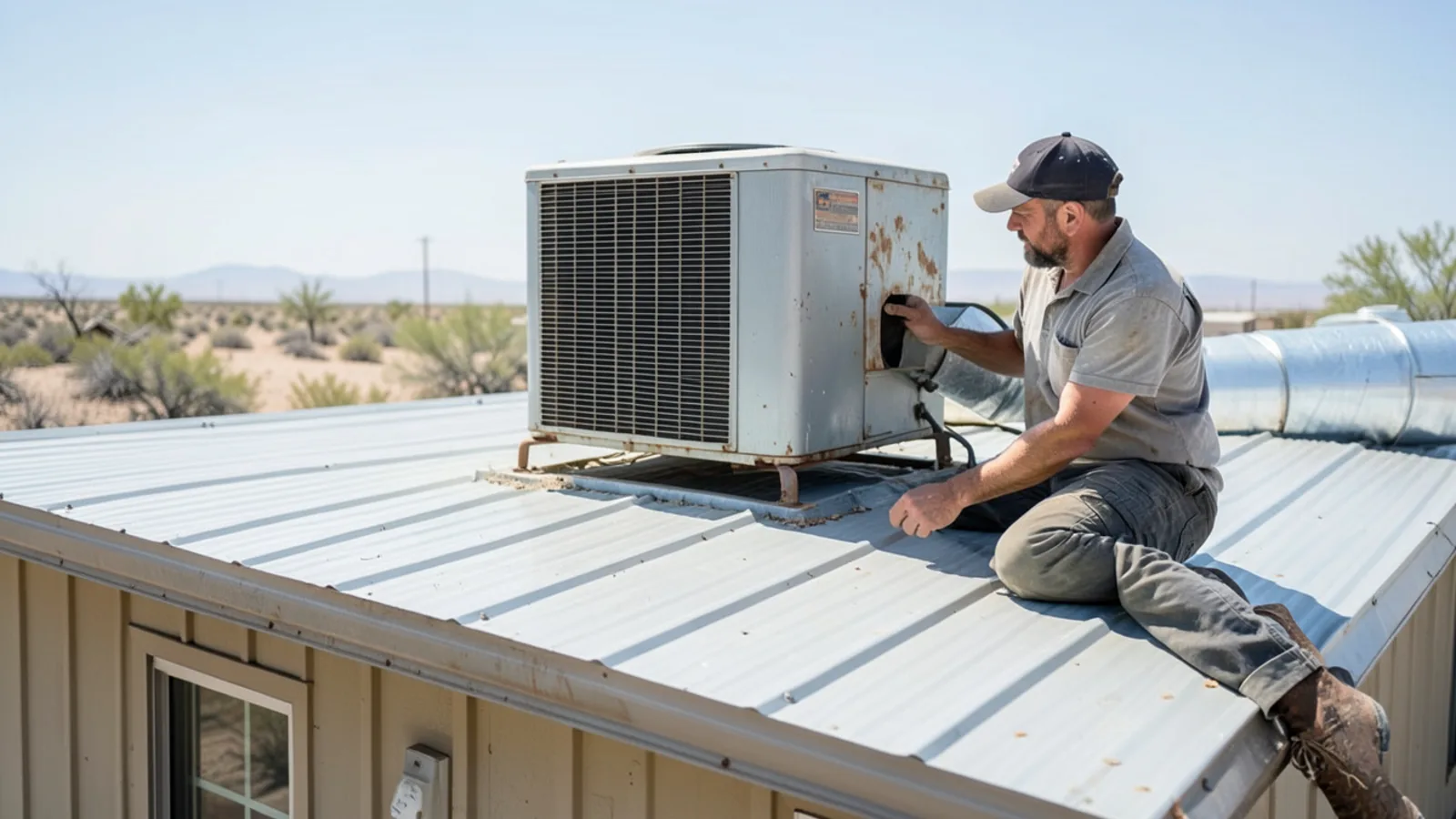
Repairing a mobile home AC package unit is recommended if the unit is under 10 to 12 years old, uses R-410A refrigerant, and repair costs stay under $600. Replacement is necessary if the compressor has failed, the unit uses obsolete R-22 freon, the coils leak, or internal static pressure exceeds HUD limits.
How Mobile Home Package Units Differ from Site-Built Systems
In Apache Junction and East Mesa, manufactured homes and park-model RVs represent nearly 46% of all residential structures. Unlike site-built single-family homes that feature separate indoor air handlers and outdoor condensers, manufactured dwellings rely almost exclusively on self-contained package units:
Self-Contained All-in-One Cabinets
The compressor, condenser fan, evaporator coil, blower motor, and electric auxiliary heat strips are all housed within a single galvanized steel cabinet situated either on a ground-level sideyard slab or mounted directly to a reinforced roof curb.
Short Sheet Metal Transitions
Air delivery occurs through two direct wall or floor penetrations: a return air drop and a supply air opening. These sheet metal transitions pass through vinyl skirting or roof curbs directly into the floor trunk ductwork.
Have Your Mobile Home Package Unit Evaluated
Call (321) 666-8870 now to connect with independent local HVAC contractors specializing in manufactured housing systems.
When to Repair: Routine Inexpensive Fixes for Package Units
When an air conditioner falters during high-heat periods, many failures stem from accessible electrical wear items rather than mechanical compressor breakdown. The following repairs provide immediate relief without requiring full unit replacement:
Swollen Dual-Run Capacitors ($150–$350)
Exposure to 115°F ambient heat breaks down the dielectric oil inside start/run capacitors. Replacing a swollen capacitor takes less than an hour and instantly restores power to a humming compressor or stalled condenser fan.
Pitted Electrical Contactors ($120–$250)
Constant electrical arcing during frequent summer cycle starts creates carbon buildup and pitting on contact points. Replacing the contactor eliminates low-voltage chattering and ensures full 240-volt power reaches the motor windings.
Condenser or Blower Fan Motor Swaps ($350–$650)
Motor bearings dried by blowing caliche dust can seize over time. Installing an OEM replacement motor matched to HUD static pressure specifications restores proper heat rejection and airflow across interior registers.
When Replacement is the Smarter Choice in Desert Climates
In the harsh Sonoran climate, manufactured home package units experience accelerated wear. Applying the $5,000 Rule (System Age in Years × Repair Cost) provides a clear benchmark:
| Failure Condition | Recommended Action | Key Economic Reason |
|---|---|---|
| Capacitor, Contactor, or Relay Failure | Repair Immediately | Inexpensive routine wear items ($120–$350); preserves existing working equipment. |
| Torn Underbelly Crossover Duct | Reseal / Replace Ductwork | Package unit is functioning properly; conditioned air is simply lost under floorboards. |
| R-22 Freon Evaporator Coil Leak | Replace Package Unit | R-22 freon is phased out and costs $175+/lb; refilling leaking coils wastes money. |
| Locked Compressor on 12+ Year Old Unit | Replace Package Unit | Compressor changeout costs $2,000–$2,800, approaching 40% of a brand-new 14.3 SEER2 system. |
The Hidden Impact of Degraded Underbelly & Crossover Ducts
In many Apache Junction manufactured homes, the air conditioner runs continuously without cooling the home—not because the unit is broken, but because the underbelly air delivery system has failed:
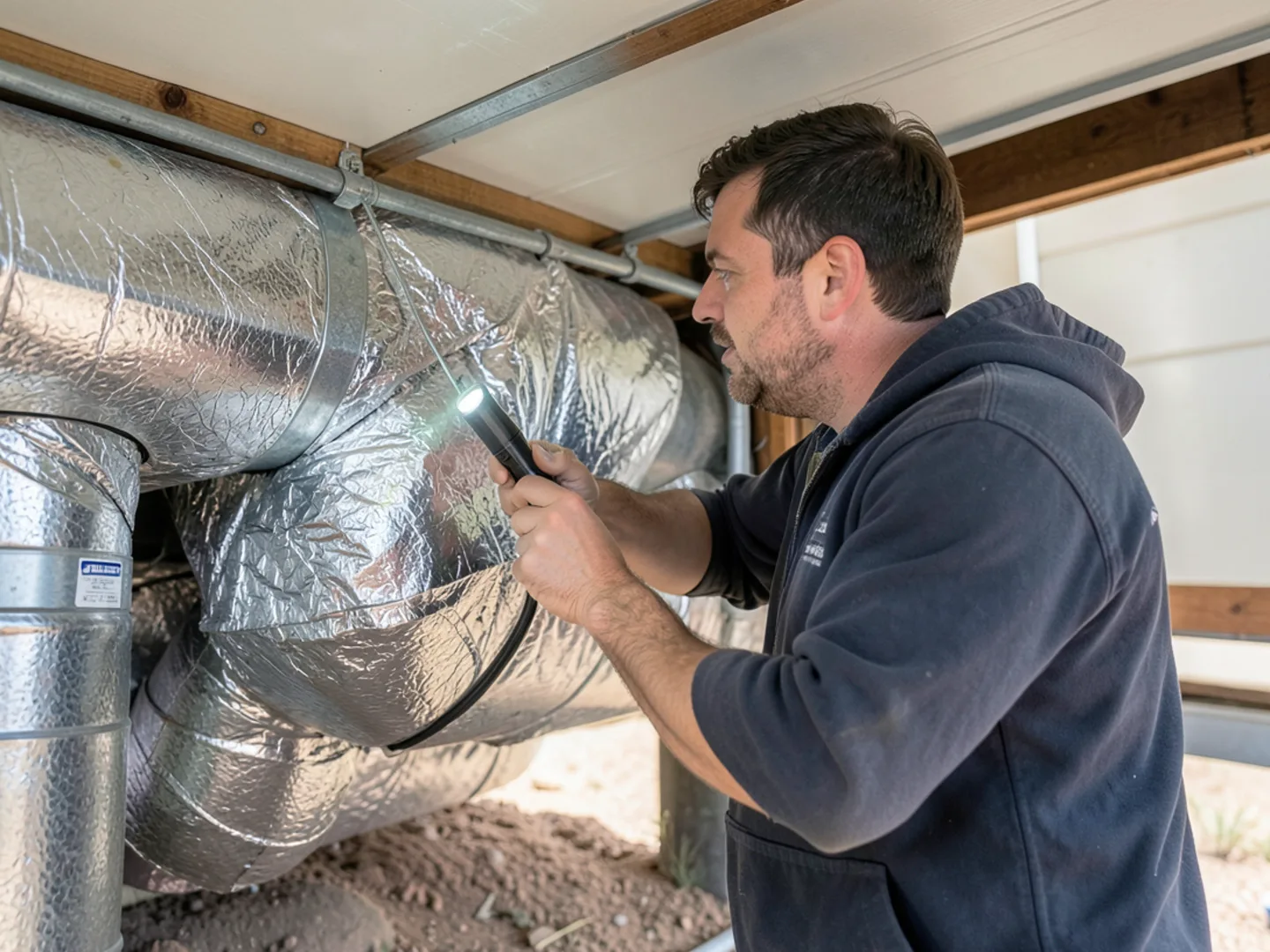
In double-wide and triple-wide homes, conditioned air travels from one side of the home to the other through a flexible insulated crossover duct suspended beneath the chassis. Over years of desert heat, desert rodents gnaw through vinyl outer jackets, duct tape dries out, and heavy crossover flex lines sag directly onto the crawlspace ground.
A single 6-inch tear in a crossover duct discharges 250 to 400 cubic feet per minute of 55°F air directly under your skirting, cooling crawlspace dirt while your master bedroom stays at 88°F. Resealing or replacing this crossover line restores full airflow at a fraction of the cost of new mechanical equipment.
Static Pressure Limitations under Federal HUD Code
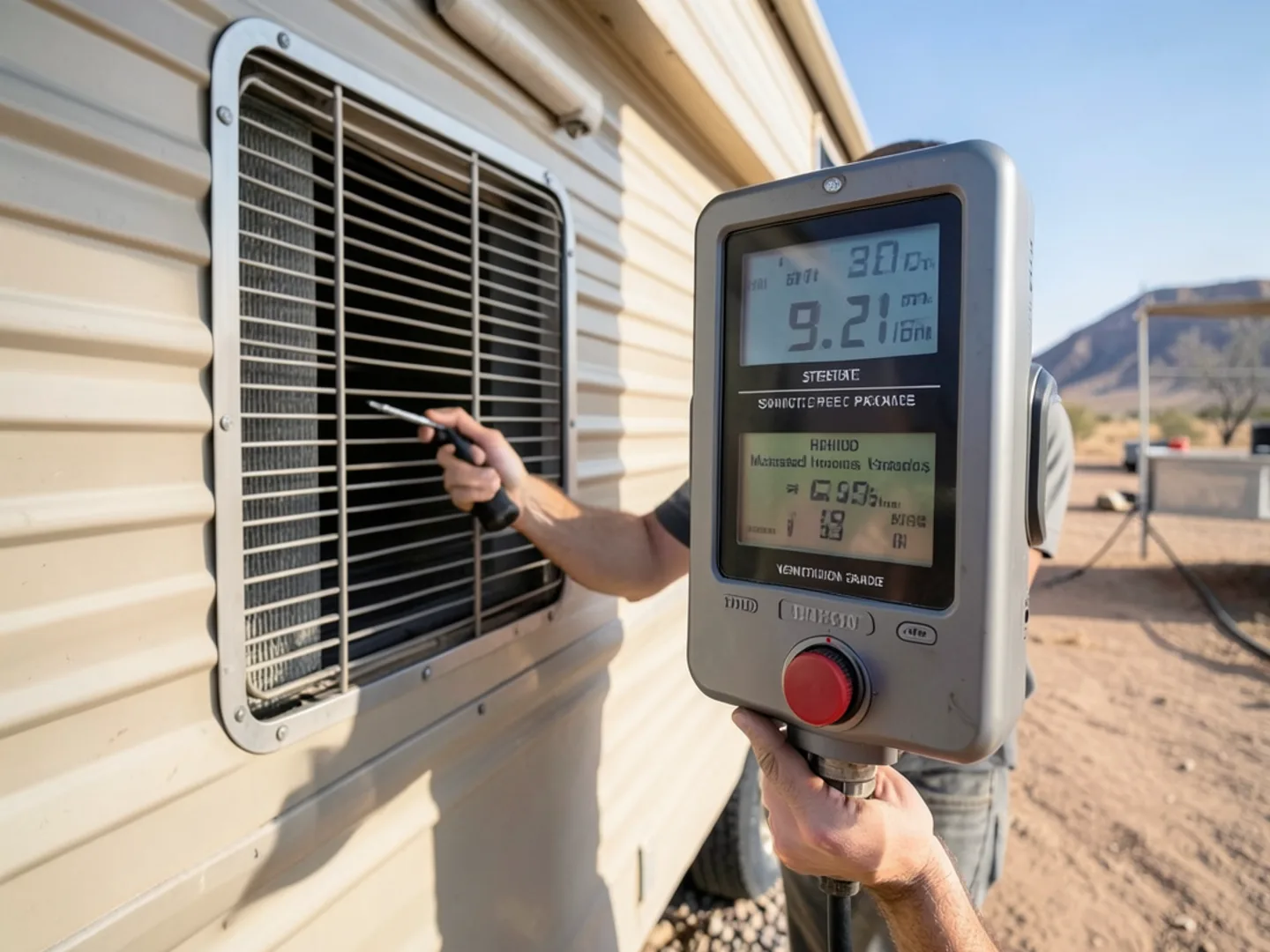
Manufactured homes are constructed to HUD Code 24 CFR Part 3280 standards. Unlike site-built houses with large attics and high-cfm supply trunks, manufactured homes feature narrow internal duct channels engineered for total external static pressure of 0.30 to 0.50 inches water column (in. w.g.):
The Danger of Mismatched Blowers
Installing a standard residential high-velocity blower into a mobile home forces static pressure above 0.80 in. w.g. The blower motor overheats, trips its internal thermal overload switch, and tears open sealed sheet metal seams along the central floor trunk.
Calibrated HUD Package Units
Dedicated mobile home package heat pumps feature specifically wound multi-speed or ECM motors engineered to overcome the high resistance of narrow under-floor supply trunks without blowing out duct fittings.
When commissioning a replacement unit, technicians insert dual-port digital manometer probes into the supply discharge duct and return air drop. Measuring total external static pressure confirms that air resistance falls squarely within manufacturer engineering tolerances. If duct resistance exceeds 0.50 in. w.g., technicians adjust blower motor speed taps or enlarge return grilles to safeguard the compressor from liquid floodback.
What a Professional Package Unit Replacement Involves
Replacing a manufactured home package unit requires specialized logistical equipment and technical precision governed by the Arizona Department of Housing (ADOH):
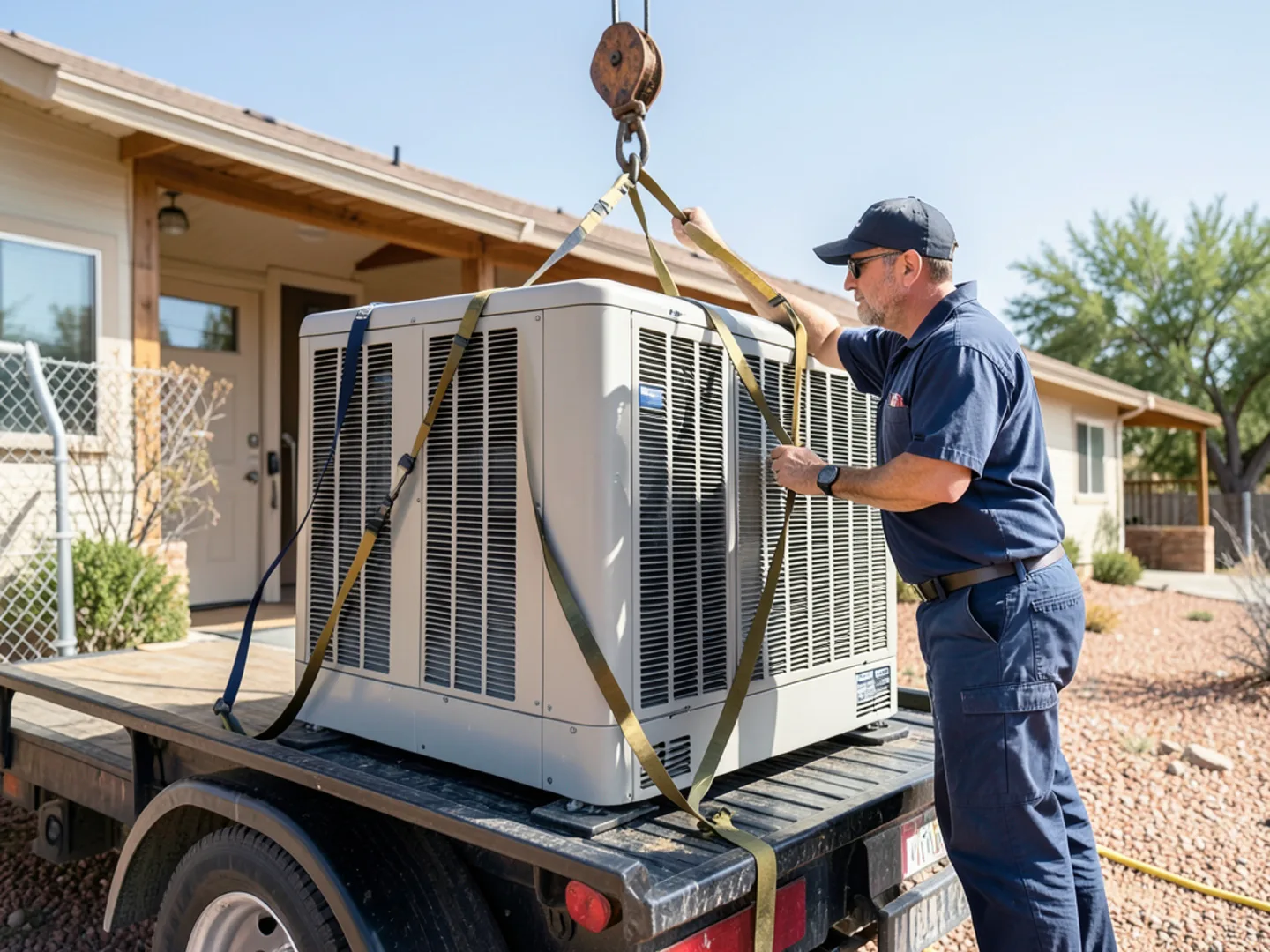
- Crane Rigging & Roof Curb Adapters: For park-model and manufactured home rooftop units, certified cranes hoist obsolete 450-lb equipment off the roof. Custom sheet metal curb transitions ensure airtight seals over existing roof penetrations without compromising lightweight roof trusses.
- Ground Pad Stabilization & Tie-Down Compliance: For ground-mount systems, technicians level composite equipment pads and clear minimum 24-inch airflow clearance from vinyl skirting, carport columns, and storage sheds. In high-wind zones, tie-down brackets anchor the cabinet securely to ground footings.
- Municipal Permitting & Electrical Disconnects: Replacements in Apache Junction require residential mechanical permits through the City of Apache Junction Building Safety Division ($150 fee) or Pinal County Development Services, verifying correct fuse sizing on outdoor service disconnects.
- Transition to Modern Low-GWP Refrigerants: As the HVAC industry shifts to modern A2L mildly flammable refrigerants (such as R-454B and R-32), dedicated manufactured housing package units include factory-integrated leak sensors and spark-proof electrical enclosures to guarantee absolute indoor safety.
Frequently Asked Questions: Mobile Home AC Repair vs. Replacement
Answers regarding repair economics, HUD static pressure limits, torn belly ducts, and package replacement costs.
Repairing a package unit is recommended when the system is under 10 to 12 years old, uses modern R-410A refrigerant, and requires routine electrical repairs—such as replacing a swollen dual-run capacitor ($150–$350), an electrical contactor ($120–$250), or a blower fan motor ($350–$650). If the repair estimate multiplied by the system age in years is under $5,000, repair is the sound economic choice.
Related Cooling Resources & Service Communities
Receive Expert Mobile Home AC Guidance
Call (321) 666-8870 to connect with independent local HVAC contractors specializing in manufactured housing package systems.